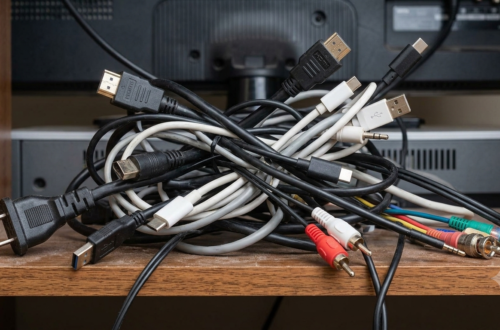
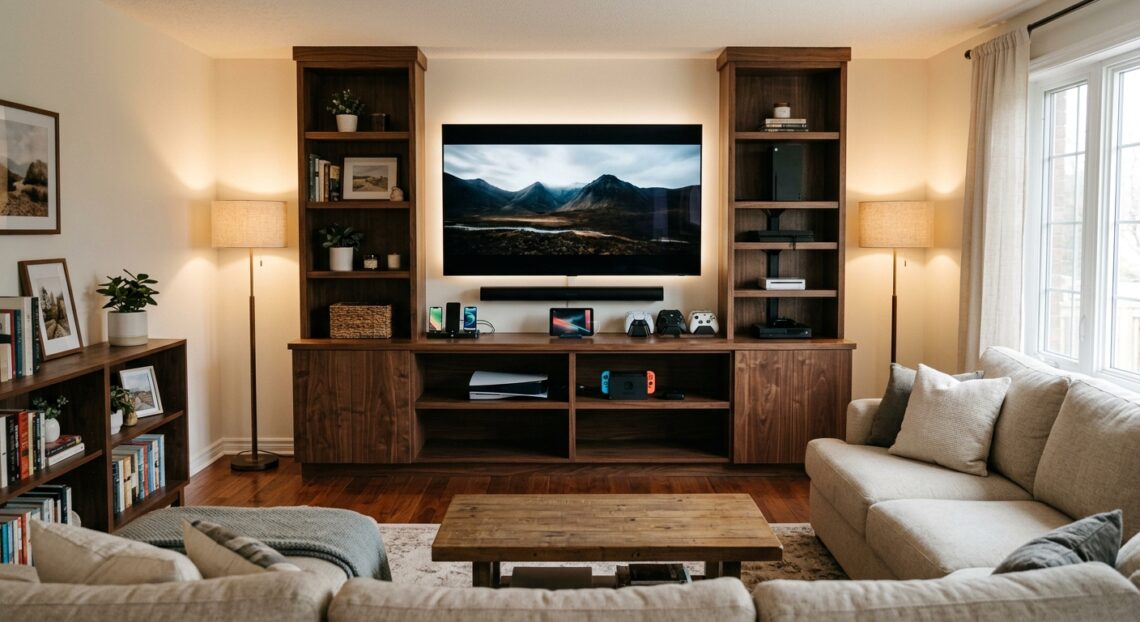
The living room is meant to be a space of rest and gathering. However, dangling TV cords, tangled gaming console wires, and power strips sitting on the floor can quickly turn the room into a space you want avoid.
While hiding living room cords might feel like an overwhelming weekend project, having the right tools can make it feel manageable. Therefore, I have created a list of 10 must-have gadgets to streamline your living room electronics without sacrificing style.
The Top 10 Living Room Cord Organization Tools:
This post contains affiliate links. As an Amazon Associate, I earn from qualifying purchases. This means that if you click on an affiliate link and make a purchase, I may receive a small commission at no extra cost to you. Thank you for supporting me!
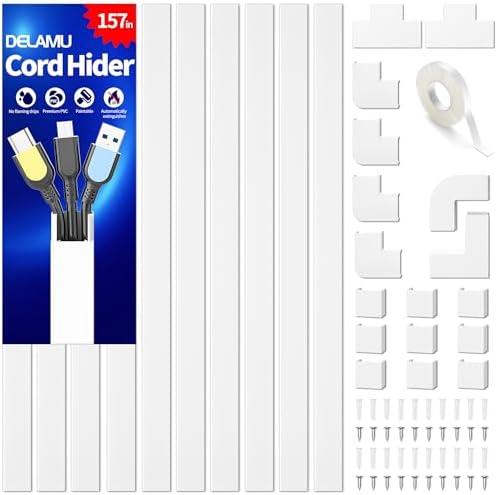
1. Paintable On-Wall Cords Raceways
- Best For: Wall-mounted TVs when in-wall routing isn’t an option (e.g., rentals or brick walls).
- Why You Need It: For instance, ditching dangling cords immediately cleans up the focal point of your living room. These channels adhere directly to drywall and can be painted in the exact shade of your wall so that your cords blend seamlessly into the background. Add a switch box if you have multiple devices that need plugged into the TV so you only need to run one cord.

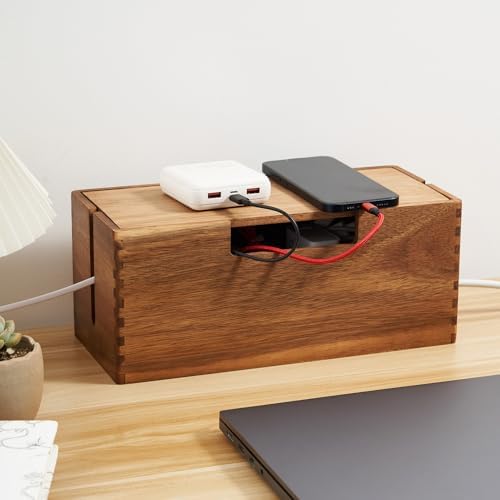
2. Decorative Wooden or Minimalist Cords Management Boxes
- Best For: Hiding bulky surge protectors, router power bricks, and messy floor clusters.
- Why You Need It: In short, placing a power strip inside a sleek cord box keeps glowing LED lights, excess wire slack, and dusty plugs completely out of sight. As a result, you’ll have a nice decorative item instead of the ugly power strip mess.
- Examples:



3. Adhesive Cord Clips & Guides
- Best For: Grouping media console cords, soundbar wires, and lamp cords behind furniture.
- Why You Need It: These small, clear, or color-matched clips adhere to wood, laminate, or metal surfaces. As a result, individual cords can be run straight down table legs or along furniture frames so wires stay out of sight lines.
- Examples:


4. Gaming Charging Station & Storage
- Best For: Charging station for gaming console and controllers so cords are in one manageable location.
- Why You Need It: The biggest issue with keeping your gaming shelf looking tidy is usually a mess of individual charging cords dangling all over for dead controllers. Charging stations consolidate everything and turn multiple cords into one footprint.
- Examples:


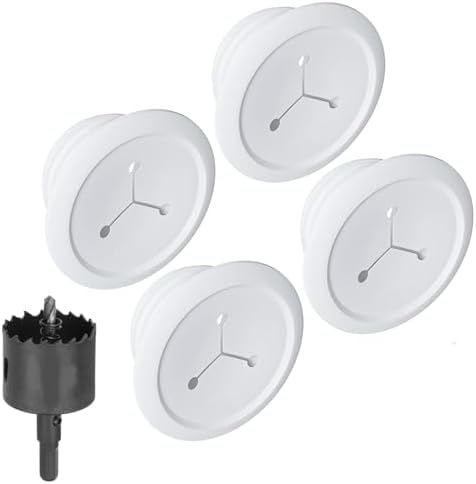
5. In-Wall Cord Concealer & Recessed Outlet Kits
- Best For: Permanent, builder-grade wall-mounted TV setups.
- Why You Need It: If you own your home and want a flush, wire-free look above a fireplace or console, an in-wall kit lets you run low-voltage cables behind the drywall safely. It creates a clean upper and lower port for a truly invisible finish.


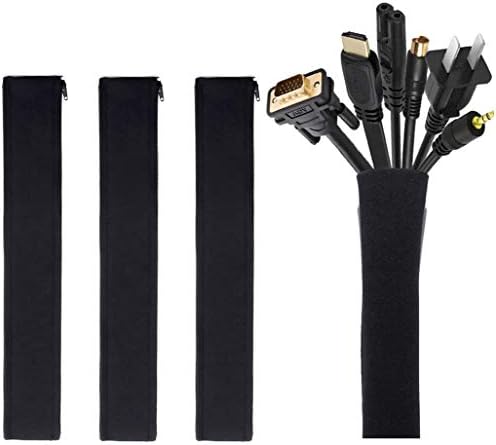
6. Zippered or Split-Mesh Cords Sleeves
- Best For: Bundling 4 to 8 individual cords running from a TV to a console or receiver.
- Why You Need It: Instead, of seeing multiple cords hanging down, a cable sleeve gathers them into a single, clean bundle. Flexible sleeves adapt easily to movement and tight corners.
- Examples:

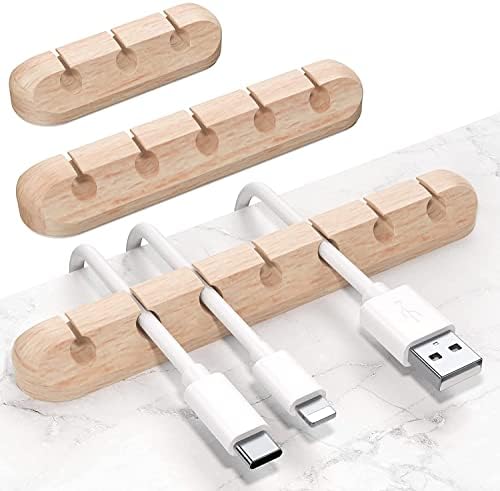
7. End-Table Cords Clips
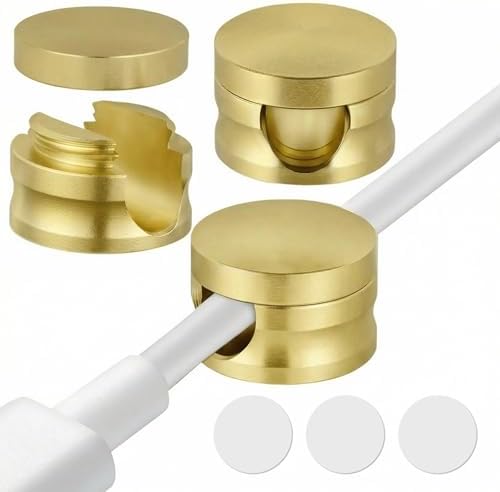
- Best For: Side tables, sofa tables, and personal device charging spots.
- Why You Need It: Tired of phone chargers slipping behind the couch or falling to the floor every time you unplug? Instead, try magnetic bases or multi-cord clips where you like to charge devices. Then charging ends are held right where you need them.
- Examples:


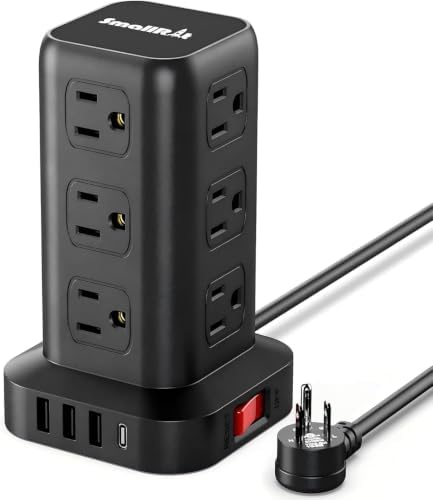
8. Ultra-Thin Flat Plug Power Strips & Surge Protectors
- Best For: Tight spaces behind media consoles, couches, or accent tables.
- Why You Need It: Standard thick plugs force furniture to sit 2 to 3 inches away from the wall. An ultra-thin flat plug fits flush against the outlet plate, allowing your couch or TV stand to sit right against the wall for a tailored look.
- Examples:


9. Under-Cabinet / Under-Shelf Cord Trays
- Best For: Open media consoles, floating shelving, or credenzas.
- Why You Need It: Mounting a metal or wire channel to the underside or back panel of an entertainment cabinet keeps heavy power bricks, streaming hubs, and extra cord lengths lifted off the floor and entirely off the shelf surface.


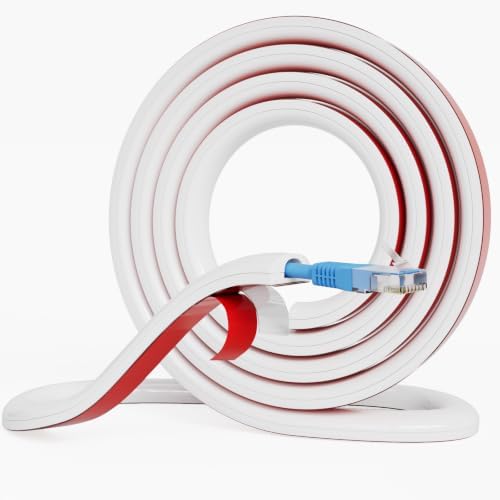
10. Baseboard Cord Channels / Quarter-Round Raceways
- Best For: Running long extension cords or ether-net cables across the living room perimeter.
- Why You Need It: When you need to get power from an outlet on one wall to a lamp or speaker on another, running exposed wire across the floor is a tripping hazard. Quarter-round baseboard raceways attach right over existing trim to hide long wire runs in plain sight.
- Examples:


In Conclusion, organizing living room cords isn’t about hiding technology— it’s about removing visual clutter so your living space feels calm and intentional. Try starting with one targeted area, like your media console or charging spot. As a result, you can transform the feel of the room in under an hour.
If you are looking for a complete overview of home cable management basics, check out my master guide: How to Hide Cords in Every Room of Your Home.